A Summer in Lacoste: Vintage Preservation at the Atelier
The first entry in our journal from the SCAD Alumni Atelier residency in France.
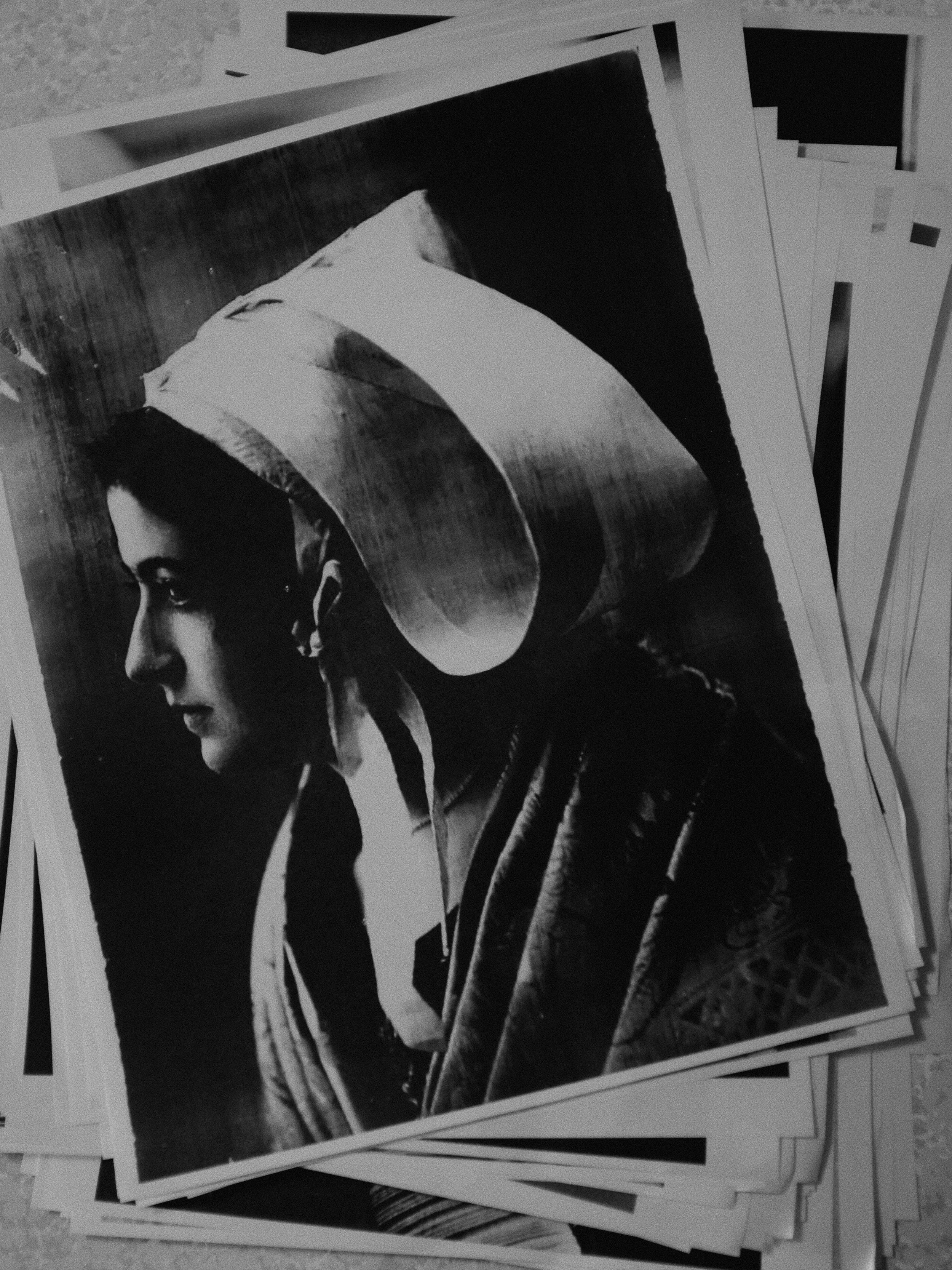
This summer, The Collection Inc. traveled to Lacoste, France, for a residency with the SCAD Alumni Atelier. I arrived with a stack of research on nuns who had lived in the region and a mission for the months ahead: to search for traces of history, study craft made long before the internet, and immerse myself in Provençal culture.
With SCAD’s support, we moved our atelier operation to Provence. Alongside our New York client projects, I would develop a new body of work for the residency. In July, I carved out a small stretch of time to give that work my full attention.
We set up our atelier in an ancient stone cave, where our white silks glowed against the walls. A window looked into a deeper chamber that had once served as the village watering hole. I kept thinking about the women and children who might have gathered there. At times, it felt as though someone from another century could walk through and greet us. I wanted the work to carry some of that spirit.
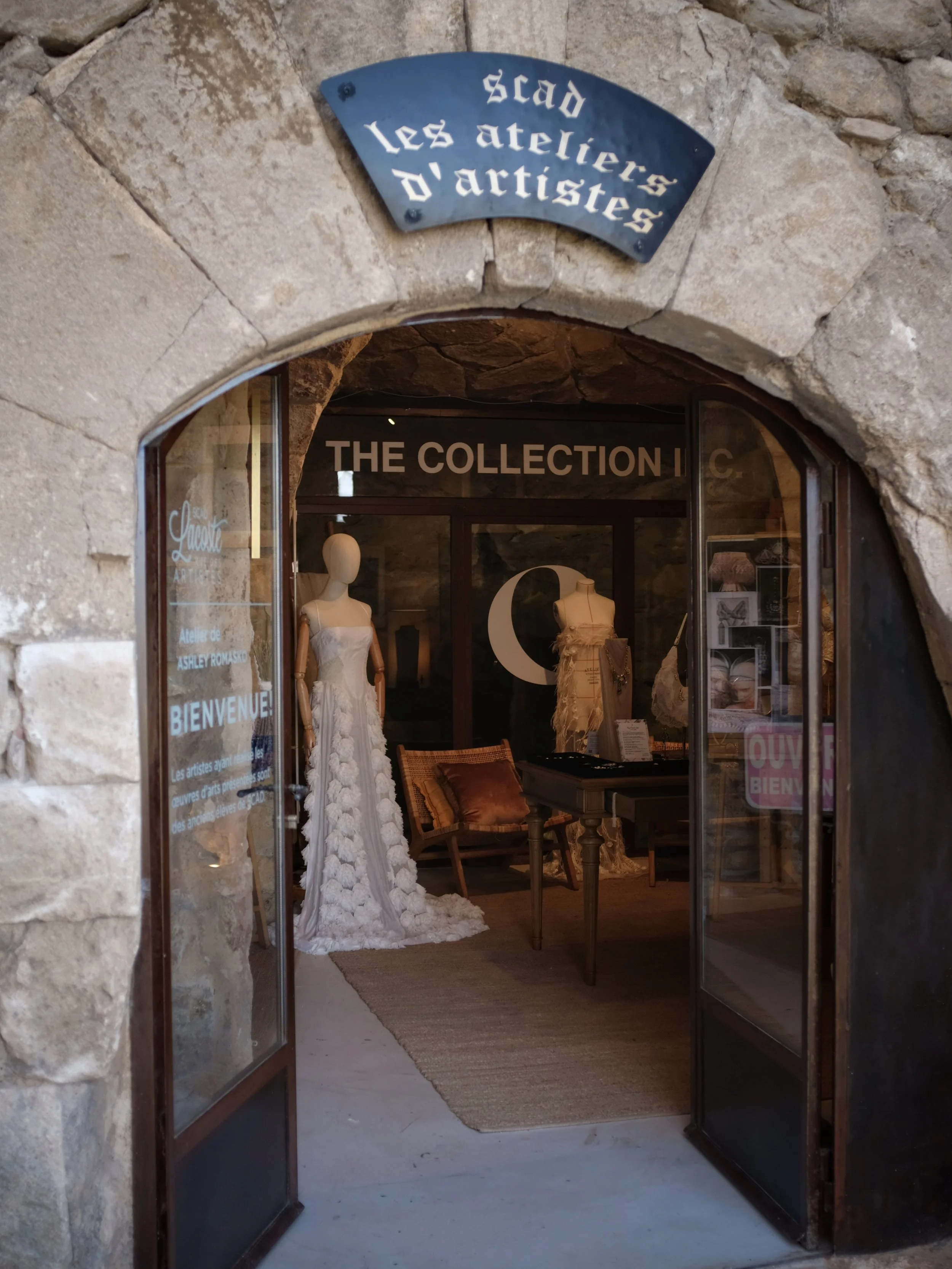
The Collection Inc. in Olivier Grand Atelier by SCAD Lacoste
I began by spreading my research across the studio and building a mood board. Visitors passing through our tiny village stopped to look. “Do you make costumes?” “Why nuns?” “Those nuns are from Arles!” Their questions started conversations I never could have planned. To everyone who signed my guest book: I hope you get to see what we made.
Beyond the studio, I spent days visiting markets, studying textiles, and following the recommendations of people who pointed me toward regional lace, embroidery, and dress traditions. I collected vintage materials for their beauty and workmanship, but also for the lives they suggested. A length of lace might have been carefully saved for decades. An embroidered fragment might be all that remains of a once treasured garment. Everything I found felt lived in, and I began thinking more deeply about what we inherit from the people who came before us.
At first, I collected without a fixed plan. I chose things that recalled my research, then gave myself permission to play: to drape, try, undo, and begin again without knowing what the outcome would be. That freedom brought me back to the inspiration I first found in Lacoste as a student ten years ago. It felt like being an art student again, with room to follow an idea wherever it led.
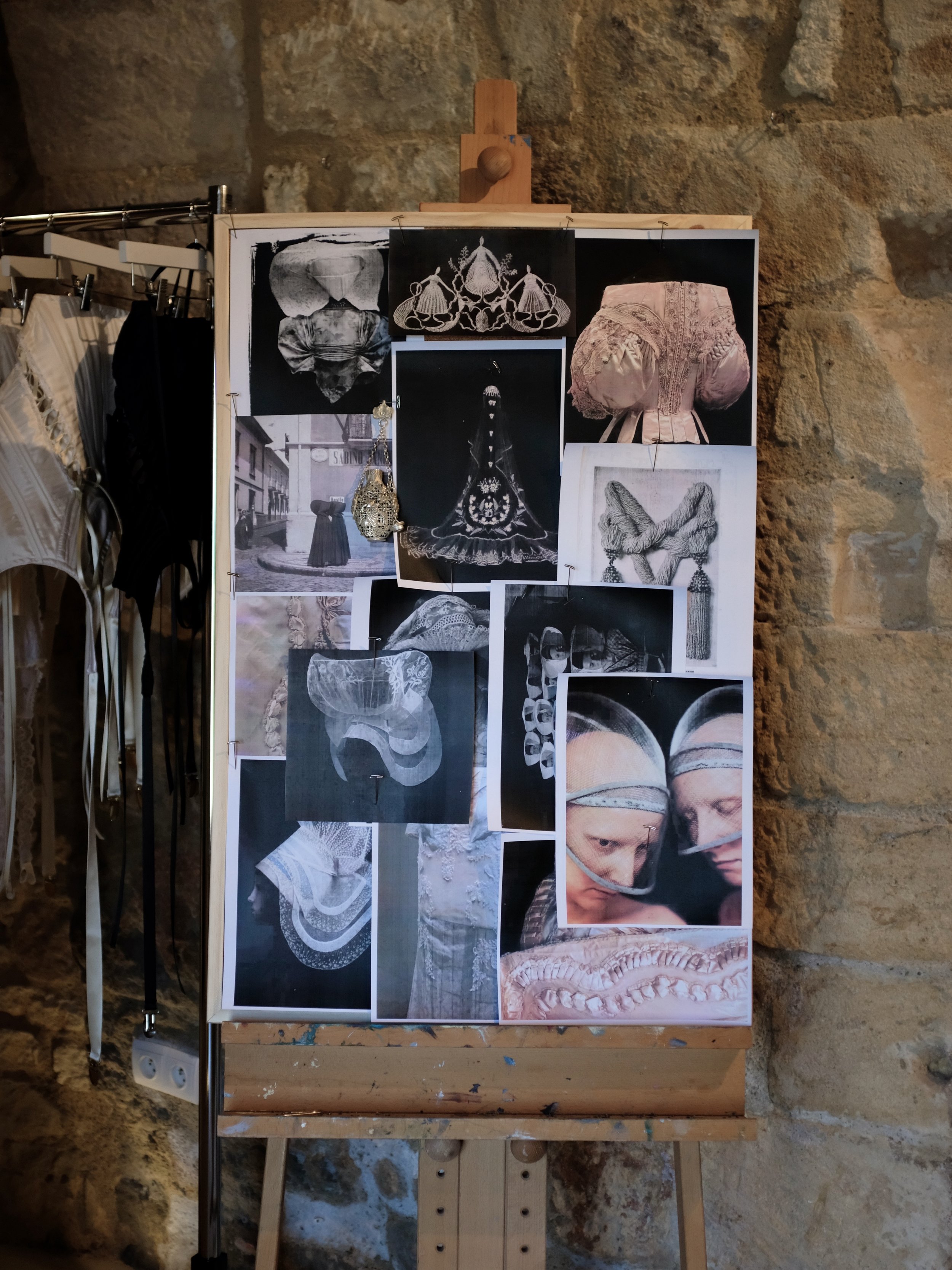
My mood board for our residency project exploring French tradition.
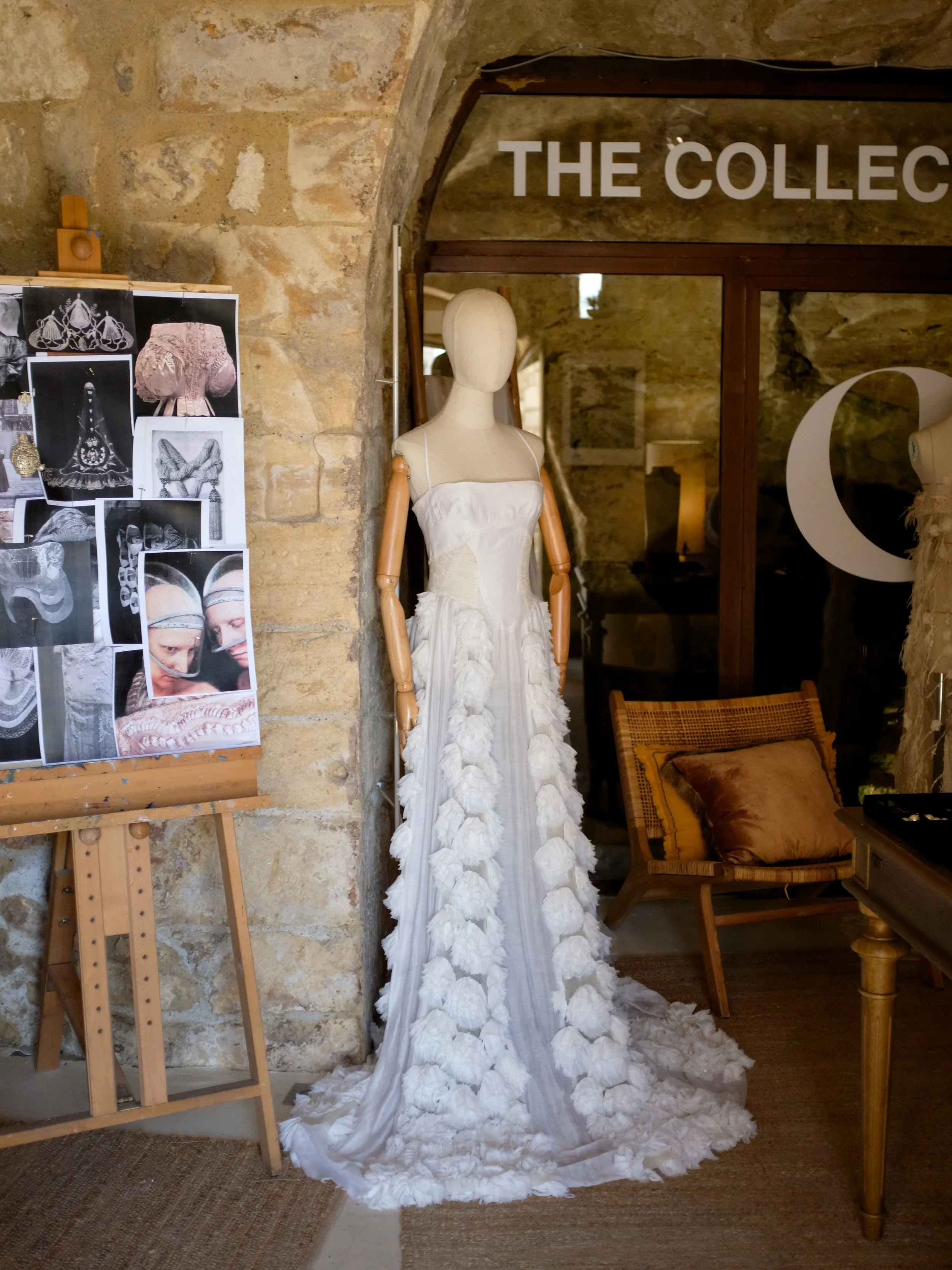
Our Amélie dress on display in our atelier.
The pieces that emerged are all one of a kind. Each incorporates antique elements that cannot be exactly replicated. Their histories remain part of the work, even as they take on a new form.
Vintage preservation, to me, is an active practice. It means studying what has survived, caring for it, and finding a way for it to be worn and loved again. That approach guided our sculptural veils, garments, and one of our signature garter bags, all made with repurposed materials. We began with what was already there and let its texture, structure, and history help shape what came next.
The residency also gave us a chance to share another part of our practice. At Charm Bar gatherings with visiting educators, guests made necklaces and declared a dream they were returning to. Those personal rituals felt connected to the work at our sewing table: choosing something meaningful, giving it a new form, and carrying it forward.
This is the first entry in a series from our summer in France. In the coming posts, we’ll share the places we explored, the materials we found, and the pieces that took shape in Lacoste. Consider this an invitation to open the sketchbook with us.
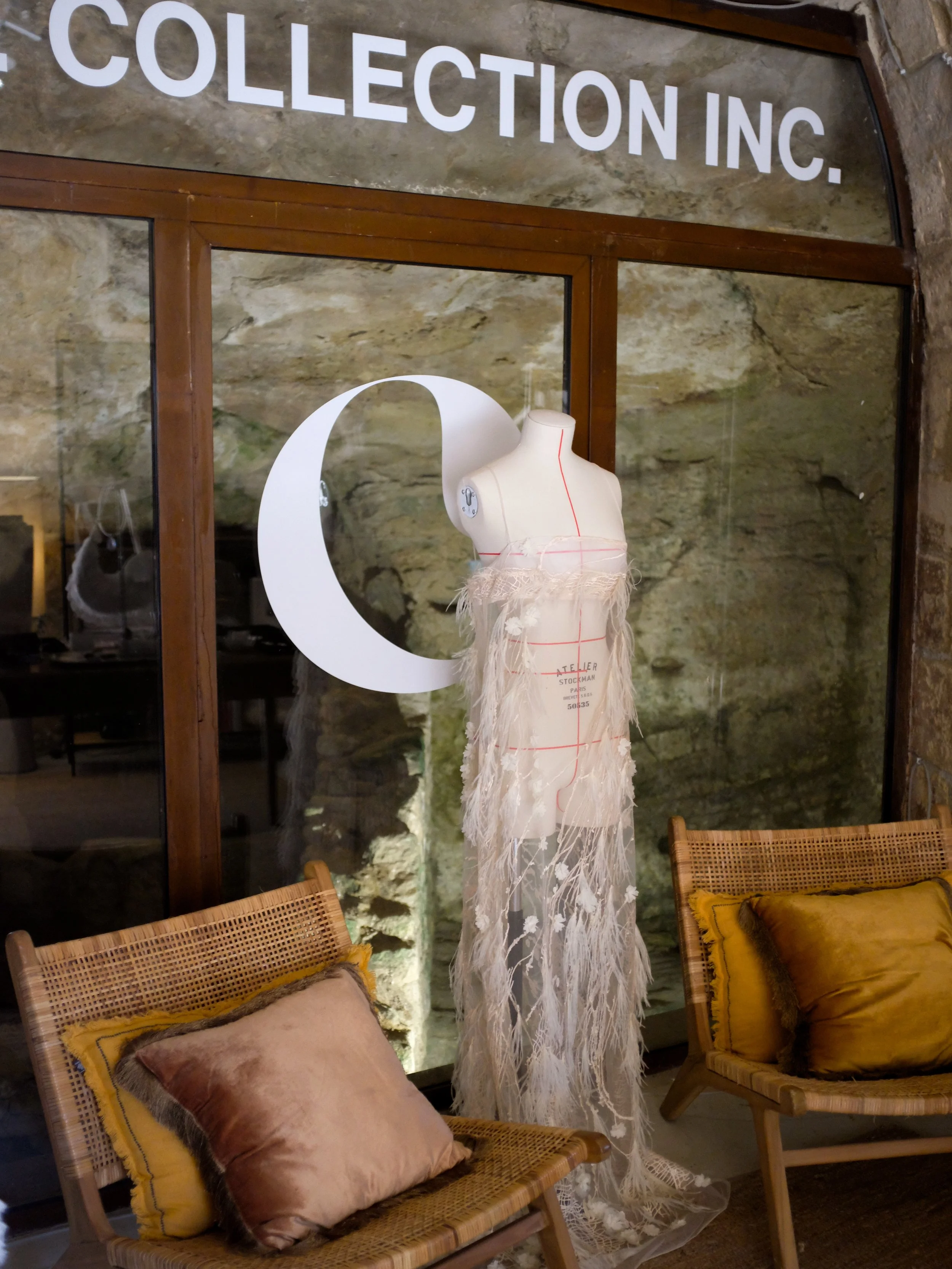
Our Gretta dress on display in our atelier.
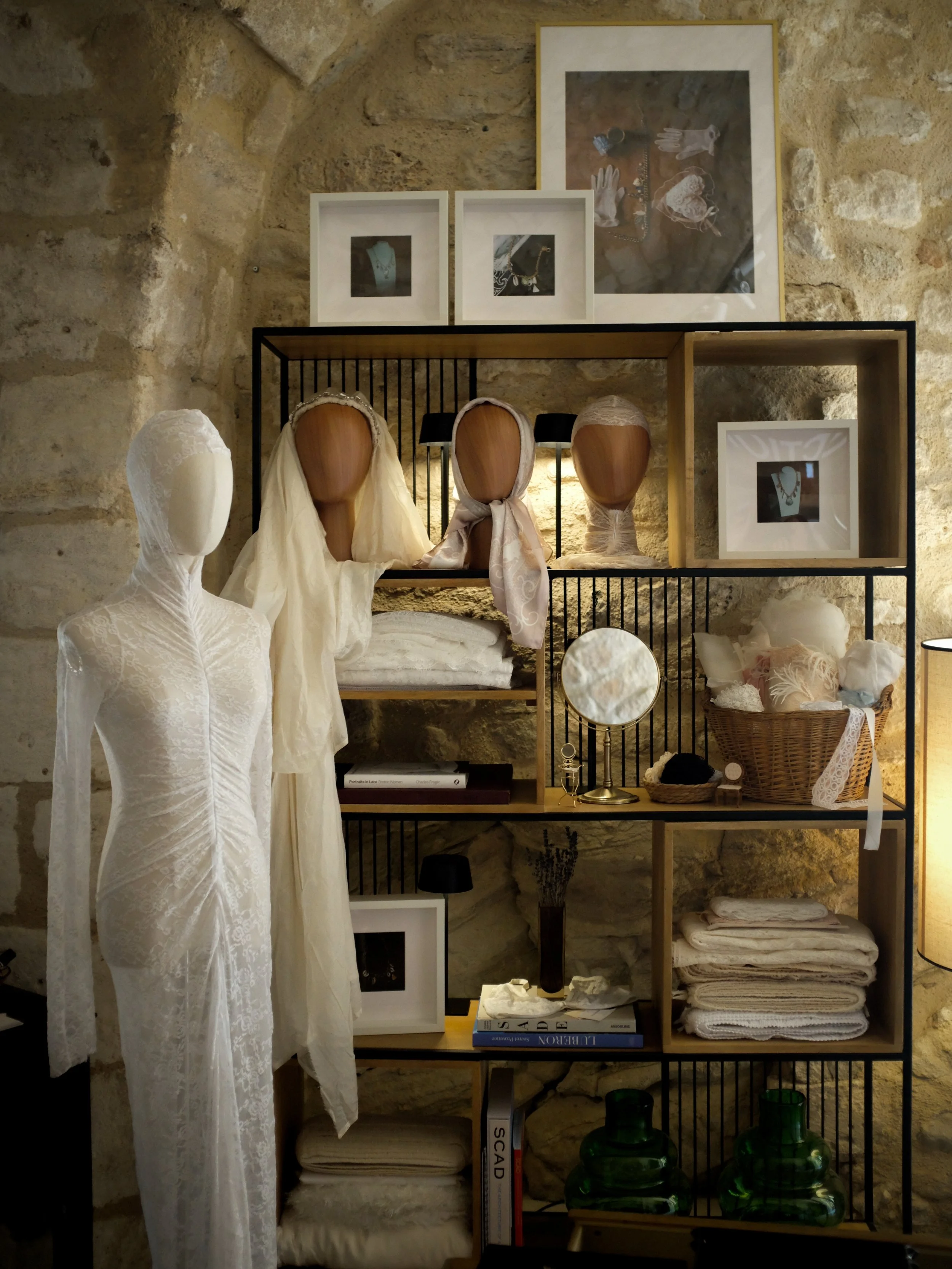
Our textiles and veils lined the shelves of the atelier next to our Astrid dress.
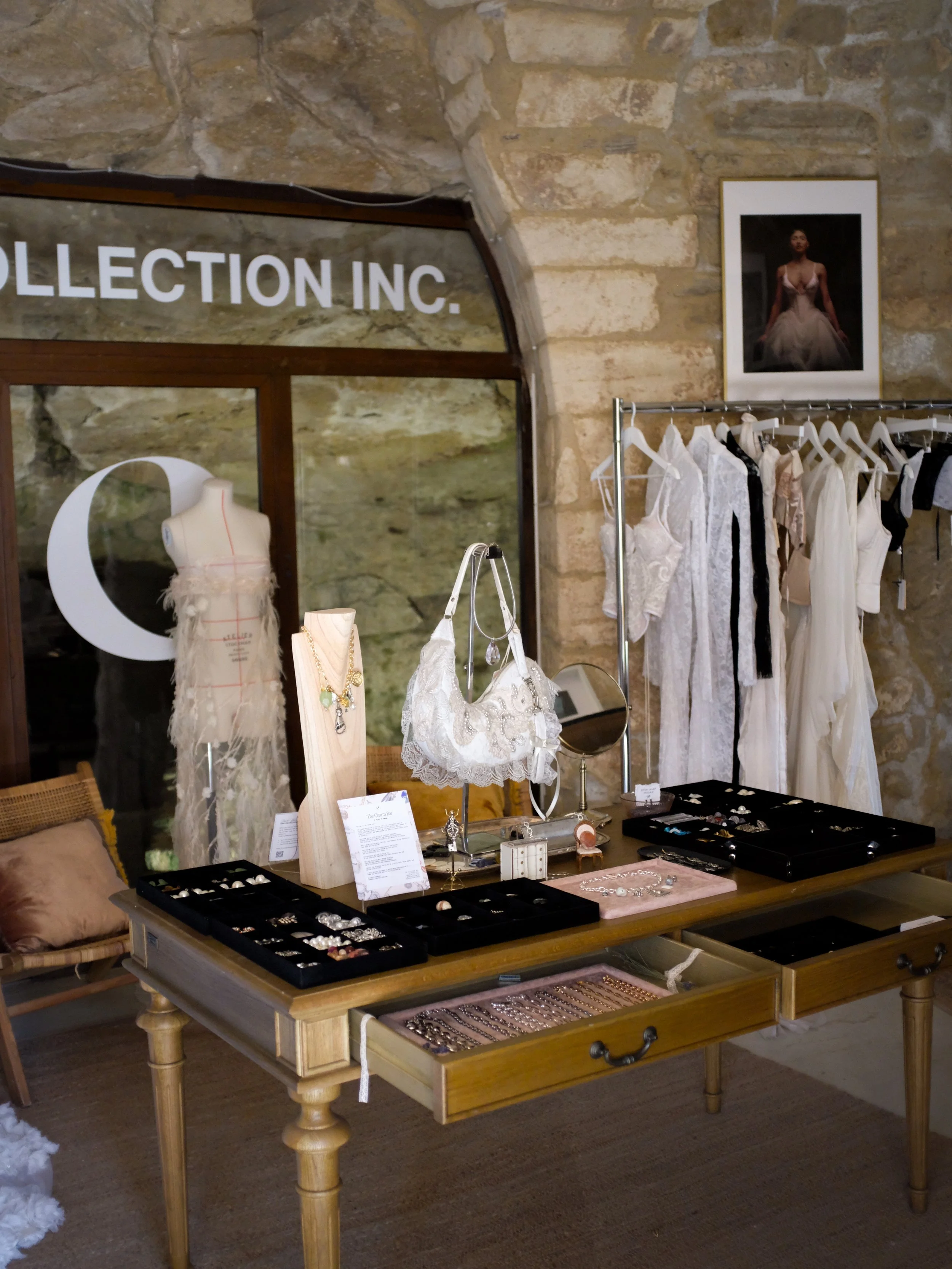
Guests were invited to participate in our Charm Bar comprised of globally sourced vintage charms.